Auditions: a question about anxiety
Auditioning is a fact of life for every actor, yet very few would call it their favourite part of the job. It’s exposing, often leads to disappointment, and doesn’t seem to get more comfortable no matter how many auditions you’ve done. The way you think and feel about it comprises your audition mindset, and that can range from comfort and confidence, through mild nerves – and if it becomes overwhelmingly negative, we call it audition anxiety.
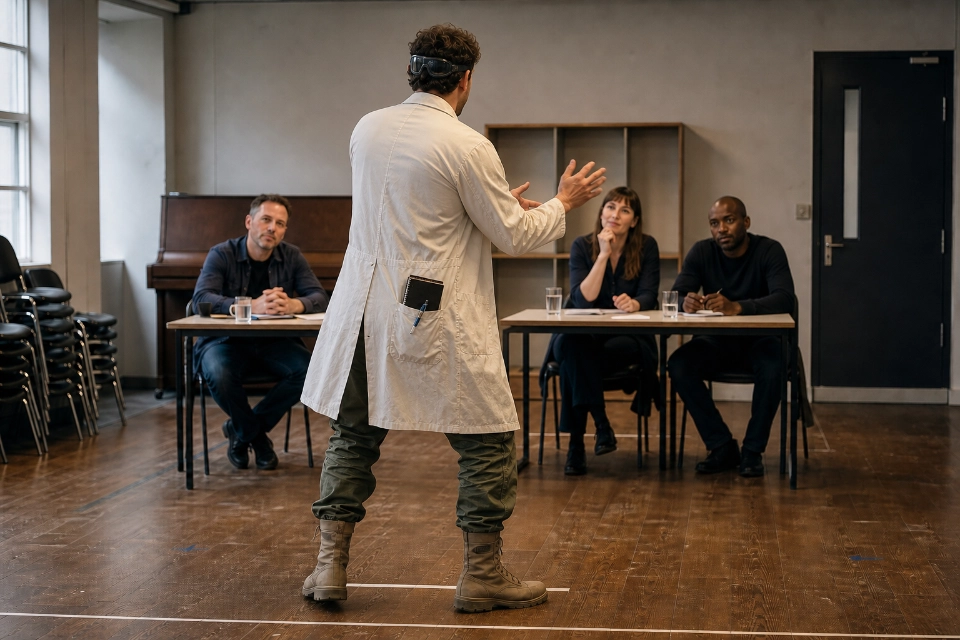
We all have triggers – the things that set it off: the wait outside the room, the moment you’re called in, catching sight of yourself on camera beforehand. And there are symptoms – what actually happens in you: the racing thoughts, the urge to run and hide, the conviction that you’re already failing before you’ve said a line. Put triggers and symptoms together often enough, and we reach for a single word to describe the whole thing: anxiety.
And yet auditions are also a genuine opportunity – to hone your craft in front of people whose job is to watch closely, to find out what your actual strengths and weaknesses are under real pressure, and to practise shifting your focus away from a negative attitude and toward an open, growth-minded approach to both auditions and your career more broadly.
That shift – from a fixed, negative script to an open, experimental one – is what this page is about. If you’ve found yourself in an audition feeling like you’re failing, or wanting to run and hide, this page is for you.
The mindset behind audition anxiety
At any given moment, you’re experiencing a mix of thoughts, physical sensations, and the actions or behaviours you respond with. That combination is your mindset – a live reading, not a fixed trait. Audition anxiety is simply the label we tend to reach for when that mindset is relating and responding to the invitation to audition.
We have a tendency to treat anxiety as if it were a diagnosis – something tangible and permanent, a thing you have. It isn’t. It’s a transient pattern of thoughts, sensations and behaviours, which is exactly why it’s workable.
Most actors never separate “the nerves” from “the mindset.” They treat audition anxiety as something to eliminate – a switch to flip off before walking in. But the nerves aren’t really the problem. The mindset that’s built up around them is.
A response to the stress of auditions
We talk about anxiety as if it were a foregone conclusion, instead of a response to outside stimulation. In the case of auditions, it is a response to the stress of preparing for, and doing the audition itself.
Every actor will have their own list of stressors, the list is often longer than the lines they have to learn. These can include learning the lines under time pressure, rearranging work to make the slot, the cost and hassle of travelling in, the moment of catching yourself on camera or in the mirror beforehand, the general hit to confidence that comes from doing something this exposing, repeatedly – that’s without the autopsy that accompanies not booking the job.
None of these stressors show up on their own. They stack. That’s why audition stress is the more honest umbrella term here – audition anxiety is what happens when our response to the collected stressors is balanced against us.
The three acts of audition stress
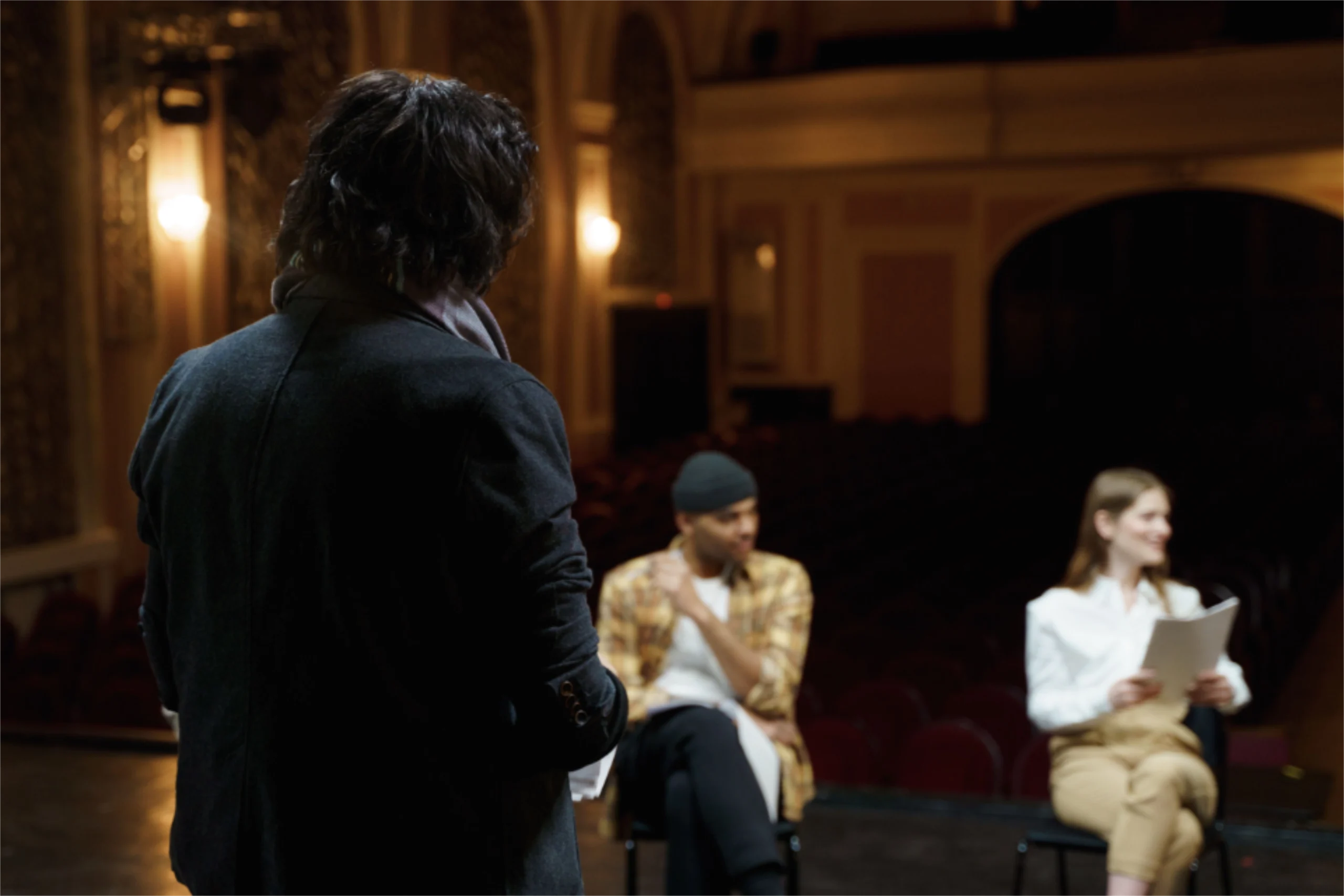
It can help to think of an audition less as a single moment and more as a structure with three acts – because the stress rarely lives only in the room. When I was training as a therapist, I was struck by how closely it follows the three-act structure often used to write a script.
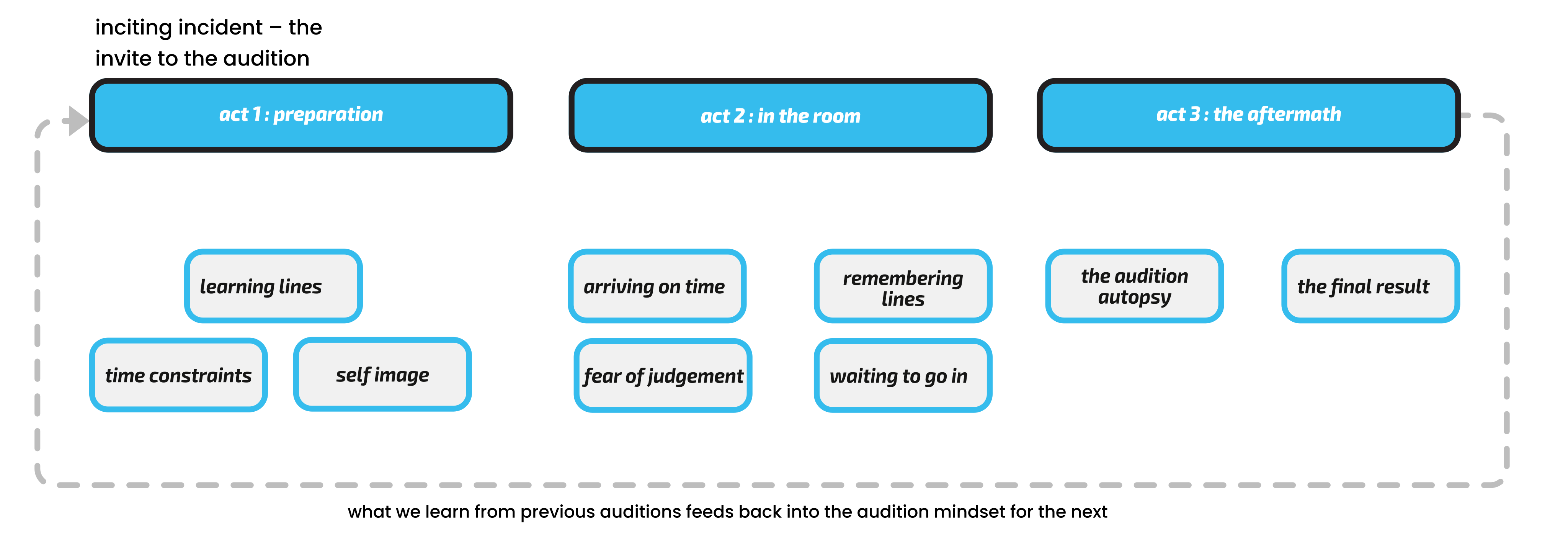
Act One: preparation
Every good drama has an inciting incident and for our purposes, it starts with the invitation to audition. This is where the compounding stressors above actually build – the lines, the logistics, the self-image spiral, the anticipation. Most of the negative script gets written here, long before you arrive.
Act Two: in the room
As with any good drama, this is the climactic battle, where the hero – the actor – shows whether they have the mettle. This is where performance anxiety and stage fright actually show up in the body – the racing heart, the tight throat, the blank mind. To the audition anxiety mindset, the audition room is a battlefield and because of this we are often in survival mode the minute we walk in the door. This applies equally to self-tapes as it does to in-person auditions – the individual stressors may vary, but the audition stress remains the same.
Act Three: the aftermath
This is where the outcome gets processed – as a verdict on your worth, or as one data point among many. For many actors, this takes the shape of an audition autopsy, where the bones get picked over and every negative belief gets reinforced, instead of opportunities for change being found. How you handle this act shapes how the next Act One begins. Handled badly, and repeated enough times, this is also where creative burnout takes root. Read more about handling rejection and building resilience →
Most actors only ever focus on Act Two – trying to calm the nerves in the room. They think if only I could manage my nerves in the room, all would be well. The approach I take when I work with actors is that all three Acts offer the opportunity for change and growth.
A script that needs rewriting
Another reason it’s useful to picture an audition with a three-act structure is that our brain has a habit of picking out all the negative details and writing a script for auditions that treats every audition room as a battlefield, instead of deciding what’s needed in the room, in the moment.
Every audition that goes badly, or simply doesn’t book, leaves something behind. Left unprocessed, it hardens into that script – a fixed story about what auditions mean and what’s going to happen this time.
Two things make that script so sticky. Your brain is always trying to keep you away from situations it reads as dangerous, and a room where you’re being watched and judged qualifies. Your brain is also fundamentally lazy – it packages repeated situations into scripted responses, the same shortcut that turns any repeated action into a habit, because running the script takes less effort than appraising what’s actually happening each time.
The trouble is, a script also has a habit of proving itself right. Once you expect an audition to go badly, your attention starts hunting for evidence that confirms it, while the evidence that doesn’t fit the story gets filtered out. It isn’t that auditions are a genuine balance of things going well and things going badly and you’re reading it accurately –
it’s that the script has already decided which half of the evidence counts. That’s what makes audition anxiety a self-fulfilling prophecy rather than just an unpleasant feeling.
This is what actually gets in the way in the room – not the nerves themselves, but a fixed response running instead of an open one, at exactly the moment you need to be building rapport with the people you’re meeting and working with enough freedom to do good work.
One of the goals of our work is to break the audition habits that may be contributing to your negative bias. Treating each audition as its own unique moment, weighing up its pros and cons in the moment, means meeting this audition on its own terms – this room, this material, this casting team – rather than through the filter of every audition that came before it. And instead of picking over the bones, we focus on what we can learn from it – that’s what stops the next script from being written the same way.
From anxiety to flexible mindset
This is the heart of what we do – an actual shift in the way we think, feel and behave towards auditions. An anxiety mindset wants control and certainty – it wants to know the outcome before it’s begun, and it treats every audition as a test with only two results: pass or fail. A flexible mindset accepts that some auditions go well and some don’t, and that this isn’t a verdict on you. It trades certainty-seeking for presence, and script-following for improvisation – meeting whatever’s actually happening in the room, rather than performing a routine designed to ward off a bad outcome.
You already know how to do this. It’s the same skill you use on stage or in front of a camera: staying present and responding to what’s actually there, not what you rehearsed in your head on the way in. You have also experienced this countless times in the audition room already. It’s just that the script got written based on your negative experiences. It’s also the core of my therapeutic approach that everyone already knows the answer – they just need to change their cognitive biases.
Recognising your triggers
One of our starting points is to identify the thoughts, feelings and behaviours that make up your mindset. A big part of that is identifying the specific triggers you find challenging, because the stressors that compound into audition stress differ from person to person, so does the work. For some actors it’s the lines. For others it’s the logistics, or the moment of self-image scrutiny beforehand, or the confidence hit of doing something this exposing on repeat. There’s no single fix that covers all of it.
What helps is identifying your specific triggers, and then treating your response to them as something to experiment with rather than something to force.
From battlefield to laboratory
One of the reasons hypnosis is so effective for working on issues like this is your nervous system can’t tell the difference between a genuine threat and a casting panel – both register as something to survive. That’s why the audition room can feel like a battlefield: somewhere to get through, not somewhere to be present in.
What we aim to do by shifting to a flexible audition mindset is to turn the room into a laboratory instead – somewhere you’re trying things out, not somewhere you’re being tested. A laboratory has room for a result that doesn’t land. A battlefield doesn’t. That difference alone changes what you bring into the room.
And when I say laboratory, I mean Dr Frankenstein mad scientist – the goal is to make auditions fun and different. We set the parameters in advance: imagine you have a film crew following you around, imagine the lights only turn on when you walk into the room, imagine the casting panel turns to statues if you don’t look at them. There are no limits to the imagination. It means we can try a different pre-audition routine, notice what actually shifts something and what doesn’t, and keep what works.
how hypnotherapy can help
Working together is a collaborative process, built around your experience. Using the structured approach of cognitive behavioural therapy, we identify the specific thoughts, feelings and behaviours that make up your audition mindset, and the particular triggers behind them. This fixed mindset acts as the script that runs in the background every time you audition.
Once we identify your mindset, we work on creating a new script, which we reinforce using hypnosis – one that helps you adapt to the challenges you’re facing in the moment. In the focused attention of hypnosis, we rehearse that new script – visualising not a perfect outcome, but a comfortable one, where even if the worst happens, you’re able to stay fully present and curious. This works because your nervous system can’t fully tell the difference between a vividly imagined experience and a real one, so the rehearsal becomes as familiar as the old script used to be. This is tailored to your needs: actor-focused hypnotherapy, where my experience as a therapist meets more than thirty years of my own experience walking into audition rooms.
where to go deeper
This page draws on other pieces already on the site, each taking a different angle on the same underlying shift:
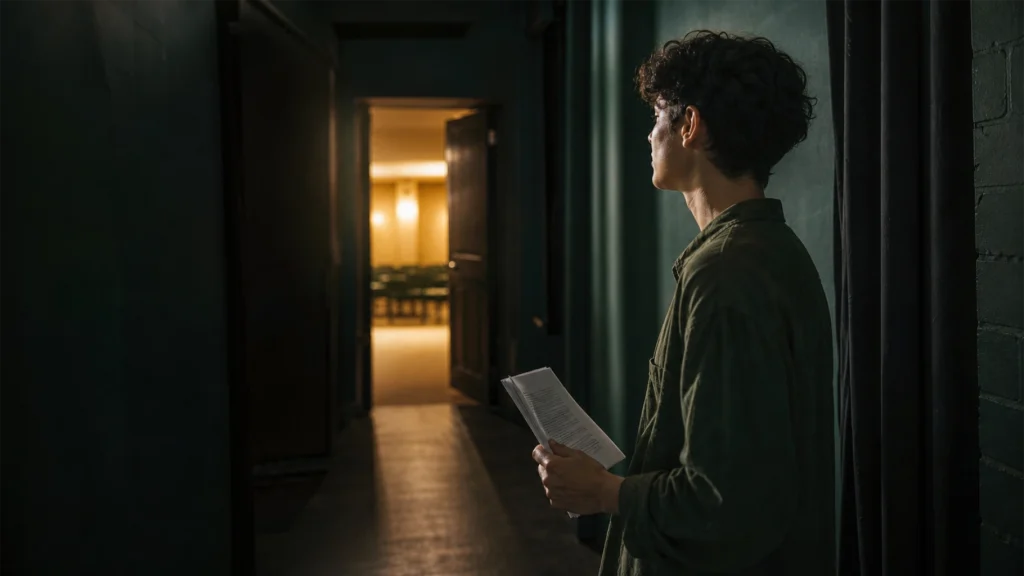
Audition Anxiety: Why Trying to Control Your Nerves Makes It Worse
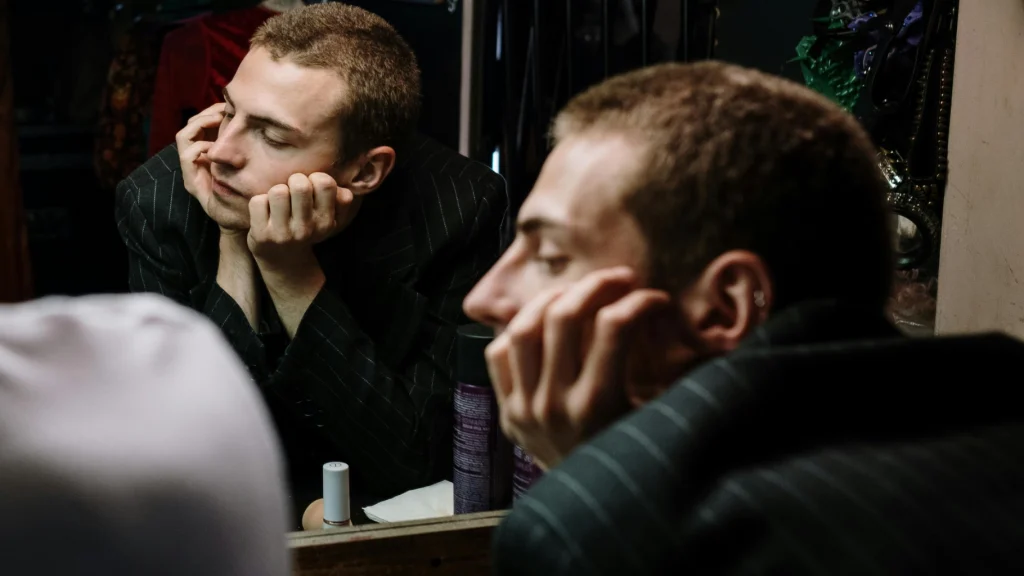
Beyond Audition Rejection: What’s Your Strategy for Not Booking the Job?
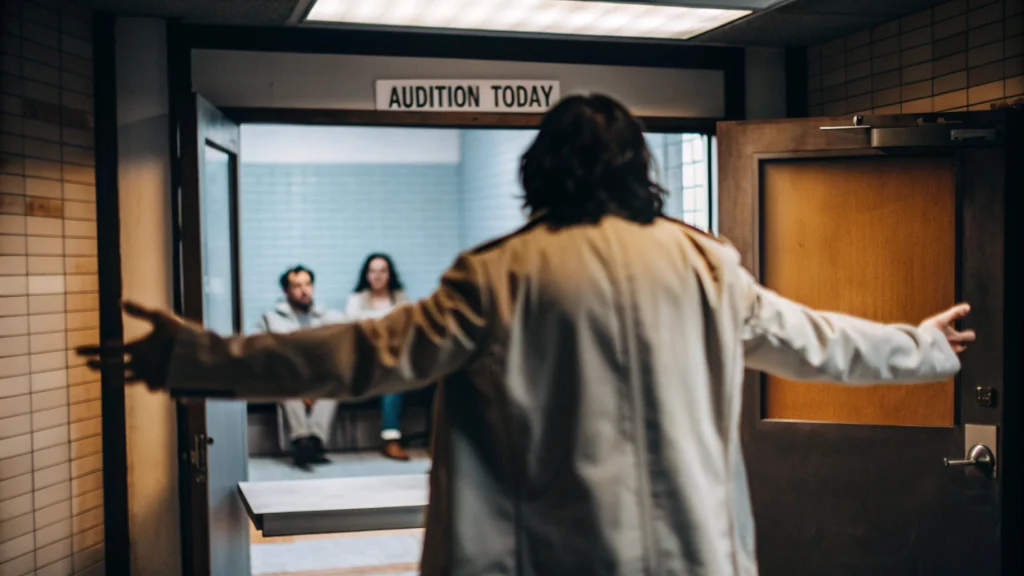
Overcome Audition Anxiety by Understanding Your Audition Mindset
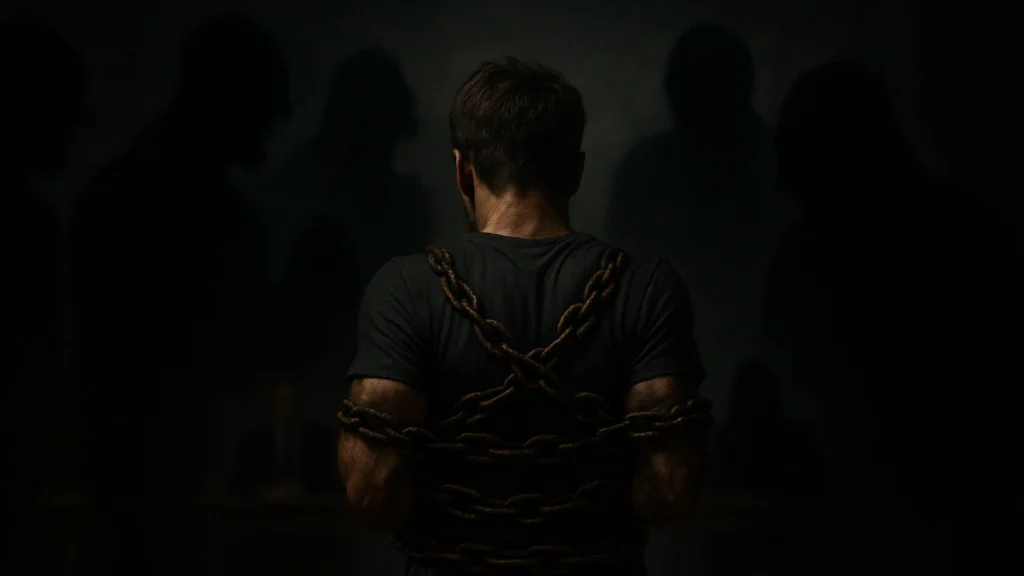
The Illusion of Control: how to Transform Your Audition Mindset from Anxiety to Presence